Thought Leadership
How Does Weather Affect Laser Weapons? A More Important Question Than It Seems
One of the most common questions we get about laser weapon systems is simple:
How do they perform in bad weather?
At first glance, it seems like a technical limitation question. In reality, it’s a battlefield dynamics question.
Because laser systems don’t operate in isolation—they operate in a contest between offense and defense, where environmental conditions shape outcomes on both sides.
And historically, weather has favored the defender.
From large-scale invasions to modern combat operations, adverse conditions disrupt coordination, degrade sensing, and break timing—core dependencies of any attacking force. Offensive systems rely on synchronization, visibility, and precision. All of these degrade in contested environments.
Defensive systems are built differently.
They are designed to absorb uncertainty.
That distinction matters.
Weather does not uniquely disadvantage laser systems—it affects everything. But in real-world scenarios, it often degrades the attacker more than the defender. And because laser weapons are fundamentally defensive—delivering speed-of-light engagement, precision targeting, and persistent coverage—they benefit from this asymmetry.
This is not theoretical. It’s observed.
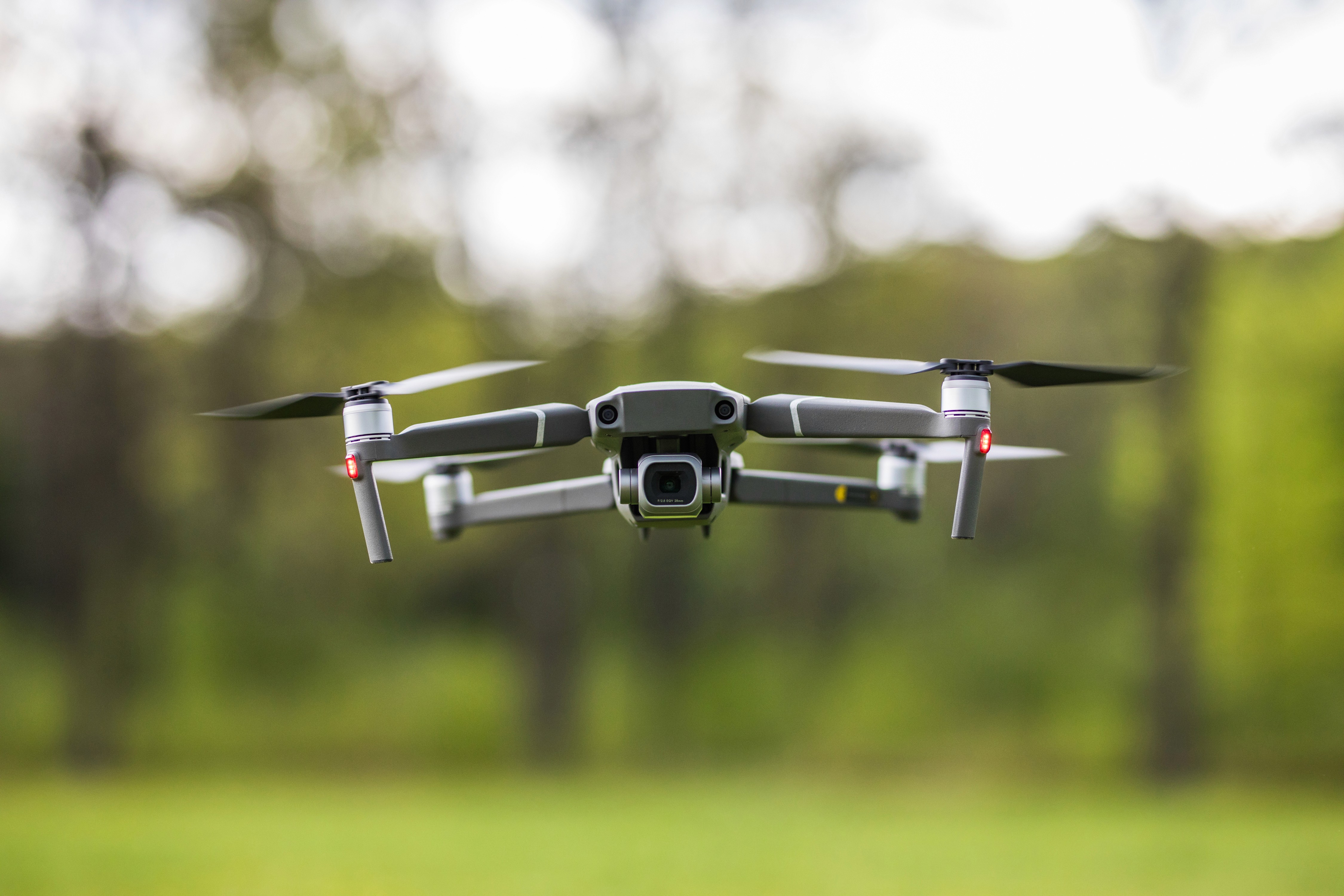
In testing and operational scenarios, high winds degrade small UAV stability, navigation, and onboard sensing well before they meaningfully impact a modern laser system’s ability to track and engage. Similarly, reduced visibility—fog, haze, cloud cover—disrupts drone sensors long before it affects advanced tracking systems integrated into directed energy platforms.
This doesn’t mean lasers are unaffected by weather.
No system is.
The real insight is comparative: in operational environments, the threat degrades first.
So why are laser systems still often labeled “fair weather” capabilities?
Part of the answer lies in perception. Laser systems rely on optical tracking—but so does nearly every modern targeting system. From human vision to infrared-guided munitions, optical sensing underpins detection and engagement across the battlefield.
Even radar systems—often considered all-weather solutions—are affected by atmospheric conditions like precipitation, humidity, and turbulence. No sensing modality operates outside environmental constraints.
Another overlooked advantage: passive sensing.
Zulu Defence’s directed energy systems are designed to detect and track threats without emitting signals. This allows continuous observation without revealing position—especially critical in degraded or contested environments.
In contrast, active systems like radar emit energy, making them detectable and targetable. This creates operational trade-offs, particularly when emission control is required.
Looking ahead, the real question isn’t how systems perform in ideal conditions.
It’s how they perform in the environments that actually matter:
Contested. Uncertain. Degraded.
What matters most there?
Persistence
Precision
Survivability
Depth of engagement
Laser weapon systems deliver across all four.
With effectively unlimited magazine depth, speed-of-light response, and seamless integration into layered air defense architectures, they provide continuous protection against increasingly numerous and low-cost aerial threats.
But performance is only part of the equation.
Deterrence is the objective.
By increasing the reliability, persistence, and cost-efficiency of air defense—even in adverse conditions—directed energy systems strengthen deterrence in a way traditional systems cannot.
And in modern warfare, deterrence is the ultimate advantage.
JOIN ZULU DEFENCE
Zulu Defence isn’t for everyone.
We build for the future of warfare—AI-powered autonomy, advanced UAV systems, and next-generation defense platforms designed to outthink and outmanoeuvre evolving threats.
We hire engineers, operators, and thinkers who move fast, solve hard problems, and build what doesn’t yet exist.
If you’re ready to define the next era of defense technology—this is where it happens.
Latest Insights
//SMART. SCALABLE. MASS-PRODUCIBLE
Misson Ready Solution For The Era Of Autonomous Warfare.
Thought Leadership
How Does Weather Affect Laser Weapons? A More Important Question Than It Seems
One of the most common questions we get about laser weapon systems is simple:
How do they perform in bad weather?
At first glance, it seems like a technical limitation question. In reality, it’s a battlefield dynamics question.
Because laser systems don’t operate in isolation—they operate in a contest between offense and defense, where environmental conditions shape outcomes on both sides.
And historically, weather has favored the defender.
From large-scale invasions to modern combat operations, adverse conditions disrupt coordination, degrade sensing, and break timing—core dependencies of any attacking force. Offensive systems rely on synchronization, visibility, and precision. All of these degrade in contested environments.
Defensive systems are built differently.
They are designed to absorb uncertainty.
That distinction matters.
Weather does not uniquely disadvantage laser systems—it affects everything. But in real-world scenarios, it often degrades the attacker more than the defender. And because laser weapons are fundamentally defensive—delivering speed-of-light engagement, precision targeting, and persistent coverage—they benefit from this asymmetry.
This is not theoretical. It’s observed.
In testing and operational scenarios, high winds degrade small UAV stability, navigation, and onboard sensing well before they meaningfully impact a modern laser system’s ability to track and engage. Similarly, reduced visibility—fog, haze, cloud cover—disrupts drone sensors long before it affects advanced tracking systems integrated into directed energy platforms.
This doesn’t mean lasers are unaffected by weather.
No system is.
The real insight is comparative: in operational environments, the threat degrades first.
So why are laser systems still often labeled “fair weather” capabilities?
Part of the answer lies in perception. Laser systems rely on optical tracking—but so does nearly every modern targeting system. From human vision to infrared-guided munitions, optical sensing underpins detection and engagement across the battlefield.
Even radar systems—often considered all-weather solutions—are affected by atmospheric conditions like precipitation, humidity, and turbulence. No sensing modality operates outside environmental constraints.
Another overlooked advantage: passive sensing.
Zulu Defence’s directed energy systems are designed to detect and track threats without emitting signals. This allows continuous observation without revealing position—especially critical in degraded or contested environments.
In contrast, active systems like radar emit energy, making them detectable and targetable. This creates operational trade-offs, particularly when emission control is required.
Looking ahead, the real question isn’t how systems perform in ideal conditions.
It’s how they perform in the environments that actually matter:
Contested. Uncertain. Degraded.
What matters most there?
Persistence
Precision
Survivability
Depth of engagement
Laser weapon systems deliver across all four.
With effectively unlimited magazine depth, speed-of-light response, and seamless integration into layered air defense architectures, they provide continuous protection against increasingly numerous and low-cost aerial threats.
But performance is only part of the equation.
Deterrence is the objective.
By increasing the reliability, persistence, and cost-efficiency of air defense—even in adverse conditions—directed energy systems strengthen deterrence in a way traditional systems cannot.
And in modern warfare, deterrence is the ultimate advantage.
JOIN ZULU DEFENCE
Zulu Defence isn’t for everyone.
We build for the future of warfare—AI-powered autonomy, advanced UAV systems, and next-generation defense platforms designed to outthink and outmanoeuvre evolving threats.
We hire engineers, operators, and thinkers who move fast, solve hard problems, and build what doesn’t yet exist.
If you’re ready to define the next era of defense technology—this is where it happens.
Latest Insights
//SMART. SCALABLE. MASS-PRODUCIBLE
Misson Ready Solution For The Era Of Autonomous Warfare.
Thought Leadership
How Does Weather Affect Laser Weapons? A More Important Question Than It Seems
One of the most common questions we get about laser weapon systems is simple:
How do they perform in bad weather?
At first glance, it seems like a technical limitation question. In reality, it’s a battlefield dynamics question.
Because laser systems don’t operate in isolation—they operate in a contest between offense and defense, where environmental conditions shape outcomes on both sides.
And historically, weather has favored the defender.
From large-scale invasions to modern combat operations, adverse conditions disrupt coordination, degrade sensing, and break timing—core dependencies of any attacking force. Offensive systems rely on synchronization, visibility, and precision. All of these degrade in contested environments.
Defensive systems are built differently.
They are designed to absorb uncertainty.
That distinction matters.
Weather does not uniquely disadvantage laser systems—it affects everything. But in real-world scenarios, it often degrades the attacker more than the defender. And because laser weapons are fundamentally defensive—delivering speed-of-light engagement, precision targeting, and persistent coverage—they benefit from this asymmetry.
This is not theoretical. It’s observed.
In testing and operational scenarios, high winds degrade small UAV stability, navigation, and onboard sensing well before they meaningfully impact a modern laser system’s ability to track and engage. Similarly, reduced visibility—fog, haze, cloud cover—disrupts drone sensors long before it affects advanced tracking systems integrated into directed energy platforms.
This doesn’t mean lasers are unaffected by weather.
No system is.
The real insight is comparative: in operational environments, the threat degrades first.
So why are laser systems still often labeled “fair weather” capabilities?
Part of the answer lies in perception. Laser systems rely on optical tracking—but so does nearly every modern targeting system. From human vision to infrared-guided munitions, optical sensing underpins detection and engagement across the battlefield.
Even radar systems—often considered all-weather solutions—are affected by atmospheric conditions like precipitation, humidity, and turbulence. No sensing modality operates outside environmental constraints.
Another overlooked advantage: passive sensing.
Zulu Defence’s directed energy systems are designed to detect and track threats without emitting signals. This allows continuous observation without revealing position—especially critical in degraded or contested environments.
In contrast, active systems like radar emit energy, making them detectable and targetable. This creates operational trade-offs, particularly when emission control is required.
Looking ahead, the real question isn’t how systems perform in ideal conditions.
It’s how they perform in the environments that actually matter:
Contested. Uncertain. Degraded.
What matters most there?
Persistence
Precision
Survivability
Depth of engagement
Laser weapon systems deliver across all four.
With effectively unlimited magazine depth, speed-of-light response, and seamless integration into layered air defense architectures, they provide continuous protection against increasingly numerous and low-cost aerial threats.
But performance is only part of the equation.
Deterrence is the objective.
By increasing the reliability, persistence, and cost-efficiency of air defense—even in adverse conditions—directed energy systems strengthen deterrence in a way traditional systems cannot.
And in modern warfare, deterrence is the ultimate advantage.
JOIN ZULU DEFENCE
Zulu Defence isn’t for everyone.
We build for the future of warfare—AI-powered autonomy, advanced UAV systems, and next-generation defense platforms designed to outthink and outmanoeuvre evolving threats.
We hire engineers, operators, and thinkers who move fast, solve hard problems, and build what doesn’t yet exist.
If you’re ready to define the next era of defense technology—this is where it happens.